More Independent Testing


✅HELMET TESTS
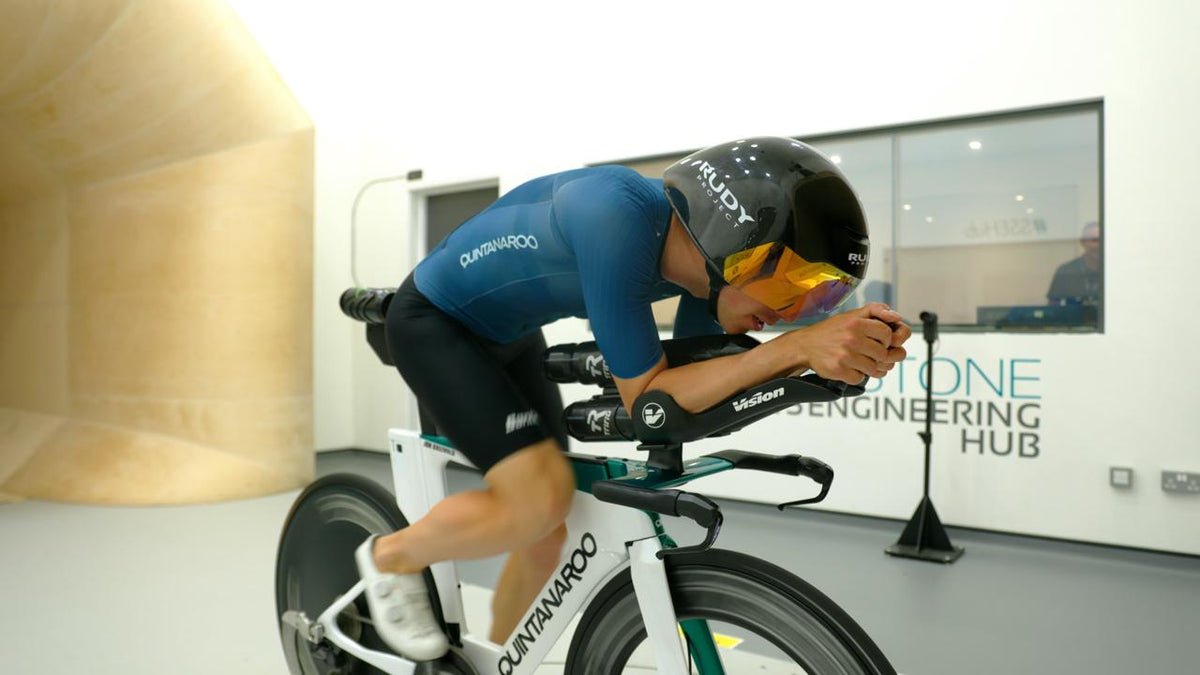
Helmet Testing ✅
EZ Gains tested Jon Breivold
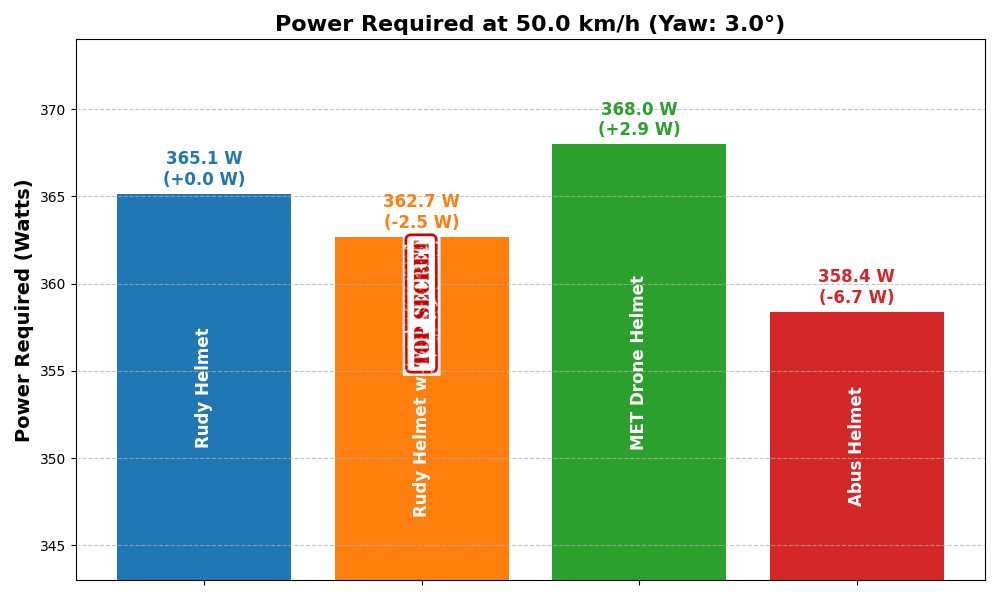
Helmet Testing ✅
Results from Jon Breivold

Helmet Testing ✅
EZ Gains tested Joran Driesen

Helmet Testing ✅
Results from Joran Driesen

Helmet Testing ✅
EZ Gains tested Kellie Branagan

Helmet Testing ✅
EZ Gains tested Kellie Branagan

Helmet Testing ✅
Results from Kellie Branagan

Helmet Testing ✅
Results from Kellie Branagan

Helmet Testing ✅

Helmet Testing ✅

Helmet Testing ✅

Helmet Testing ✅
EZ Gains tested Marc Dubrick 40kph

Helmet Testing ✅
Results from Marc Dubrick 45kph

Helmet Testing ✅
Results from Marc Dubrick 50kph
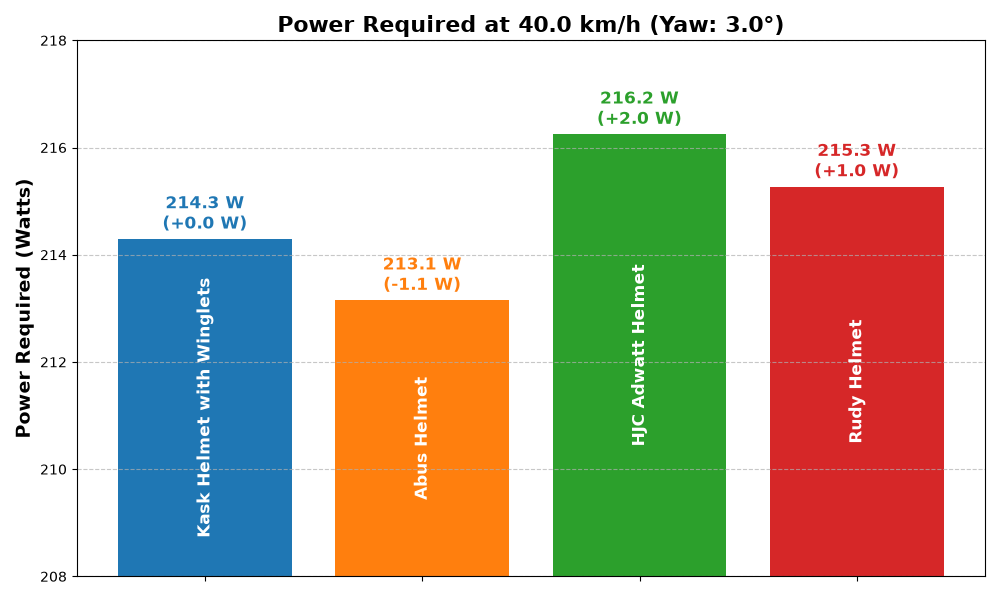
Professional Athlete X - 40km/h
✅Race Ranger
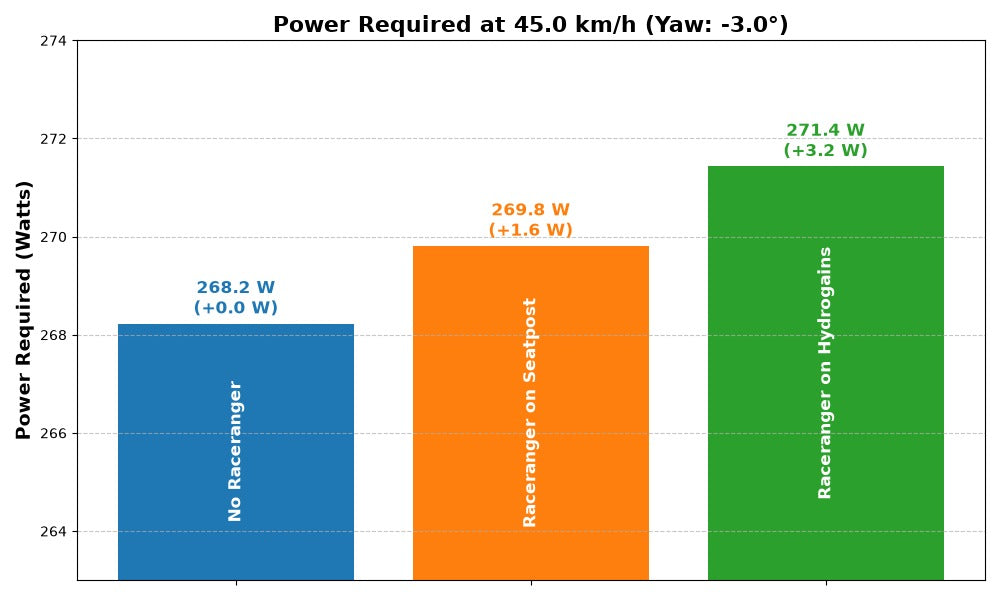
Race Ranger Joran Driesen Results✅

Race Ranger Joran✅

Race Ranger Marc Dubrick✅

Race Ranger Marc Dubrick Results✅

Race Ranger Marc Dubrick Results✅
✅Mono vs Dual Bars
There are always going to be variables with this kind of testing. However, when you test enough bikes and components, you start to build a meaningful scientific baseline, and that can then be used to make better predictions about likely outcomes.
At this point, I would suggest that if the pitch of the aero bars is around 15 degrees, riding a mono-bar could potentially provide an aerodynamic advantage. My concern is that, as the mono-bar becomes more highly pitched, it could begin to act as a larger obstruction to the airflow rather than an aerodynamic benefit.
There is also another factor to consider: when you make such a significant change at the front of the bike, you inevitably influence the airflow and dynamics behind it. The front of the bike doesn't operate in isolation, so any substantial change needs to be considered as part of the entire system.
I would also encourage athletes to make the right choice when purchasing a mono cockpit. Yes, the carbon options can be expensive, but when they are designed and tested by a reputable manufacturer and used in accordance with the relevant manufacturer's regulations, they can provide a safe solution.
Ultimately, though, the front end of a bike is an area where safety has to take priority. You're dealing with a component that, in the event of a failure, has the potential to cause serious injury. For the sake of gaining a few watts, it may be worth looking at more cost-effective aerodynamic improvements elsewhere on the bike while keeping the risk as low as possible.
The fastest solution isn't always the one that produces the biggest number in isolation. It's the one that delivers a measurable gain while maintaining the reliability, handling and safety of the complete system.
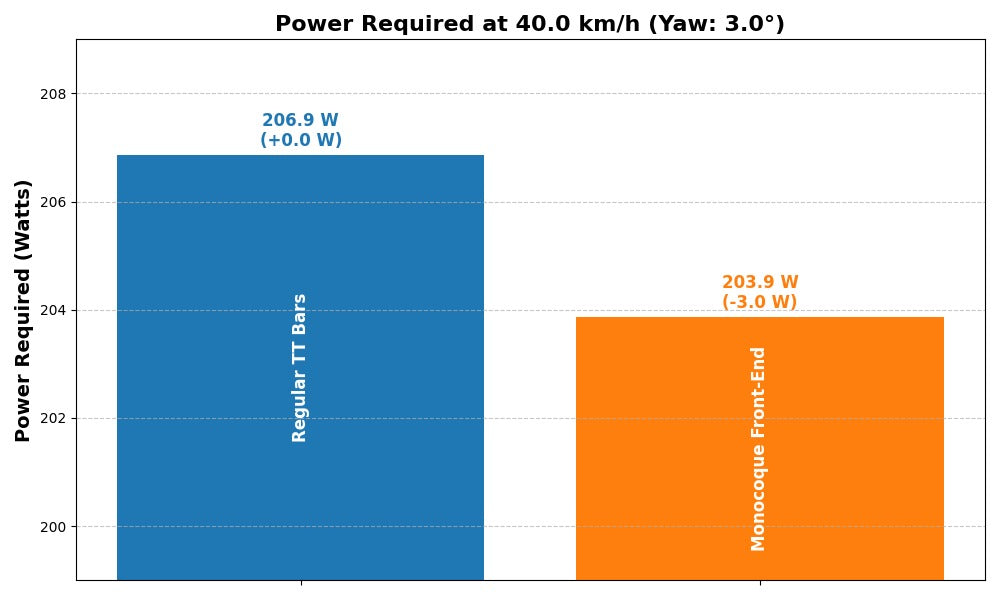
Jon Breivold✅
3 Watts at 40 kph
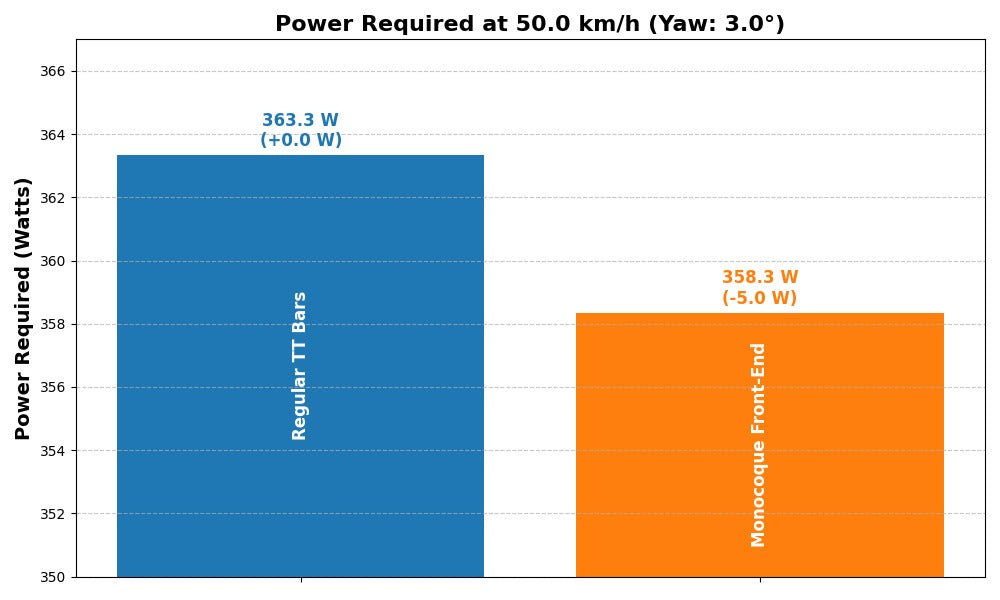
Jon Breivold✅
5 Watts at 50 kph

Mono -Simulated vs Dual Bars
Using the same bars but we created an insert to make them a mono system just for simulation purposes.
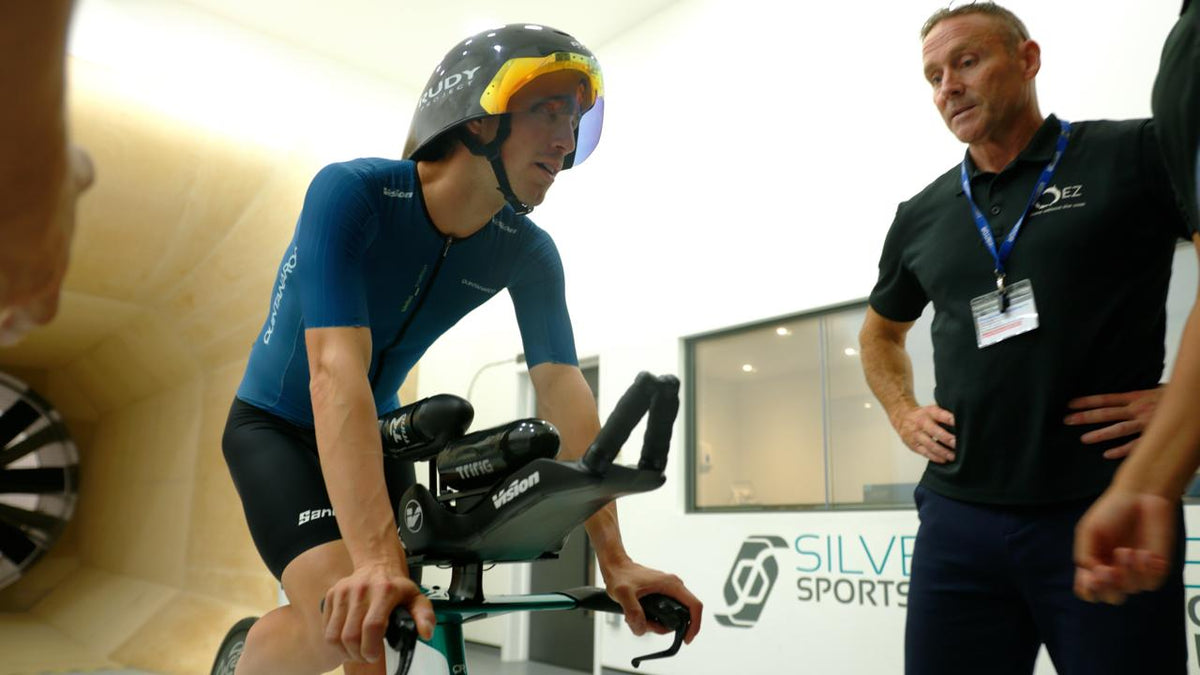
EZ Gains tested adding an Aero Bar Cover at the front of the bike to replicate an aero cockpit. We feel this would be classed as a fairing so will not go into production. 2022 Tests
EZ Gains tested a front Aero Bar Cover 1-6 Watts
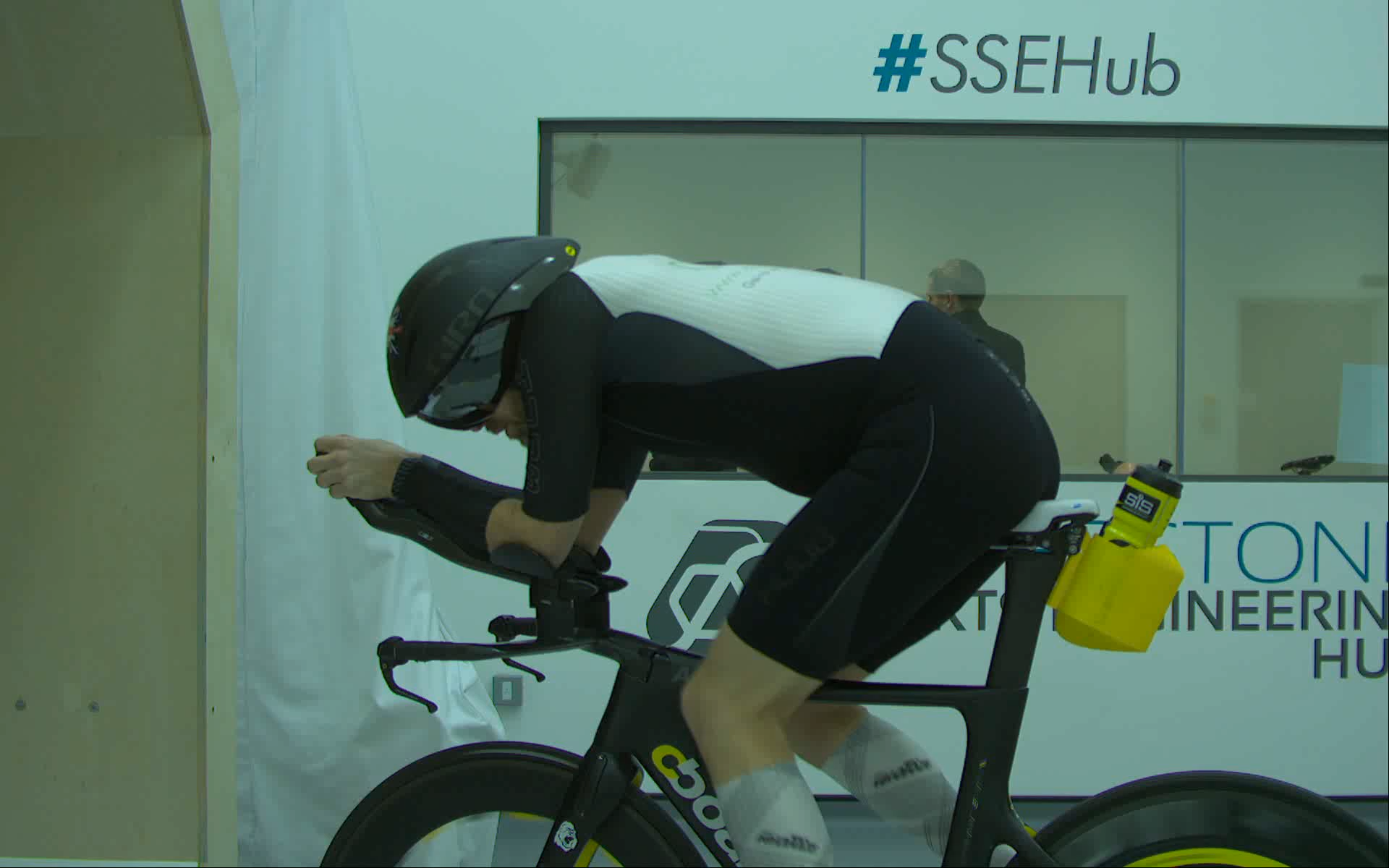
No Aero Bar Cover
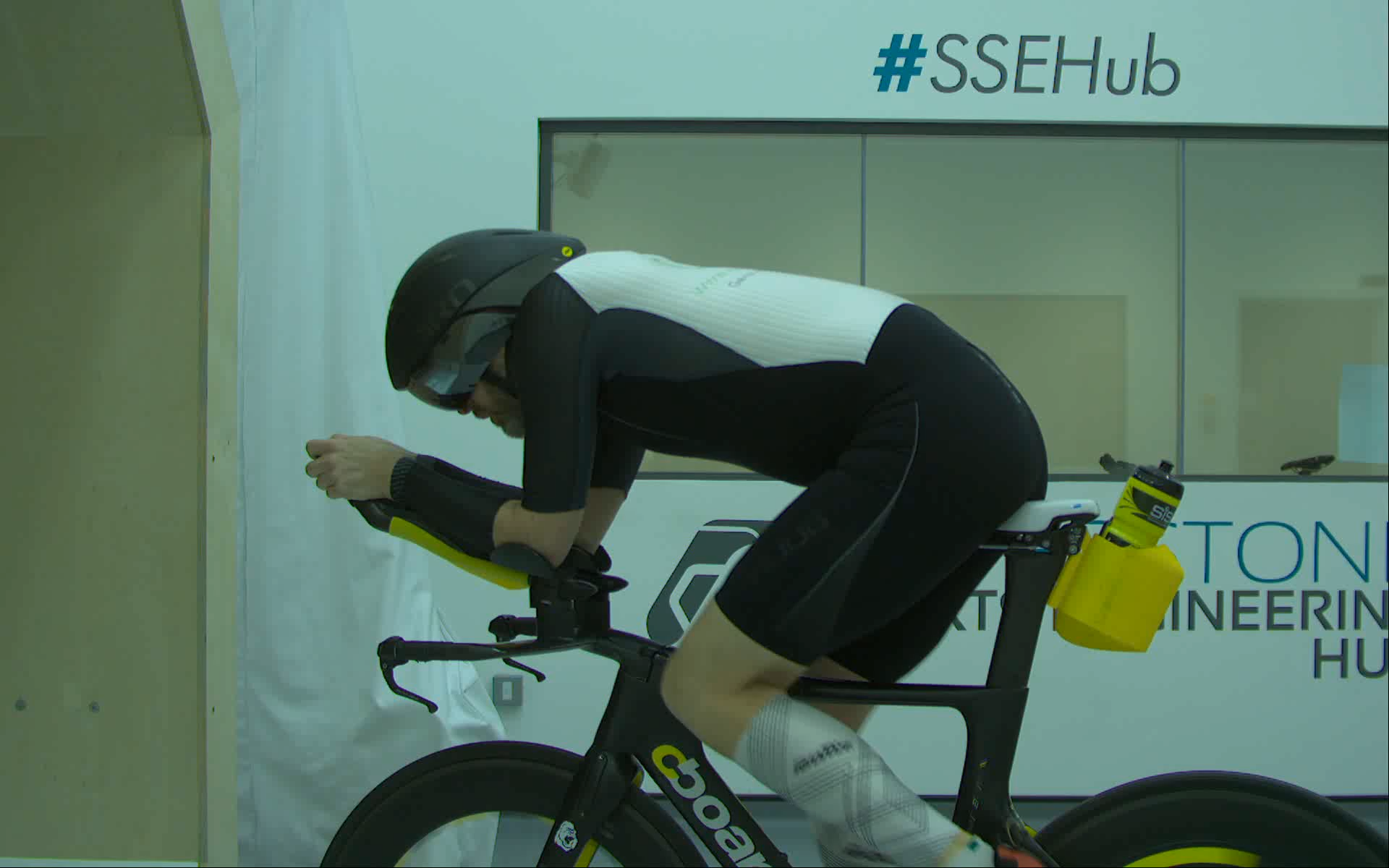
Aero Bar Cover On
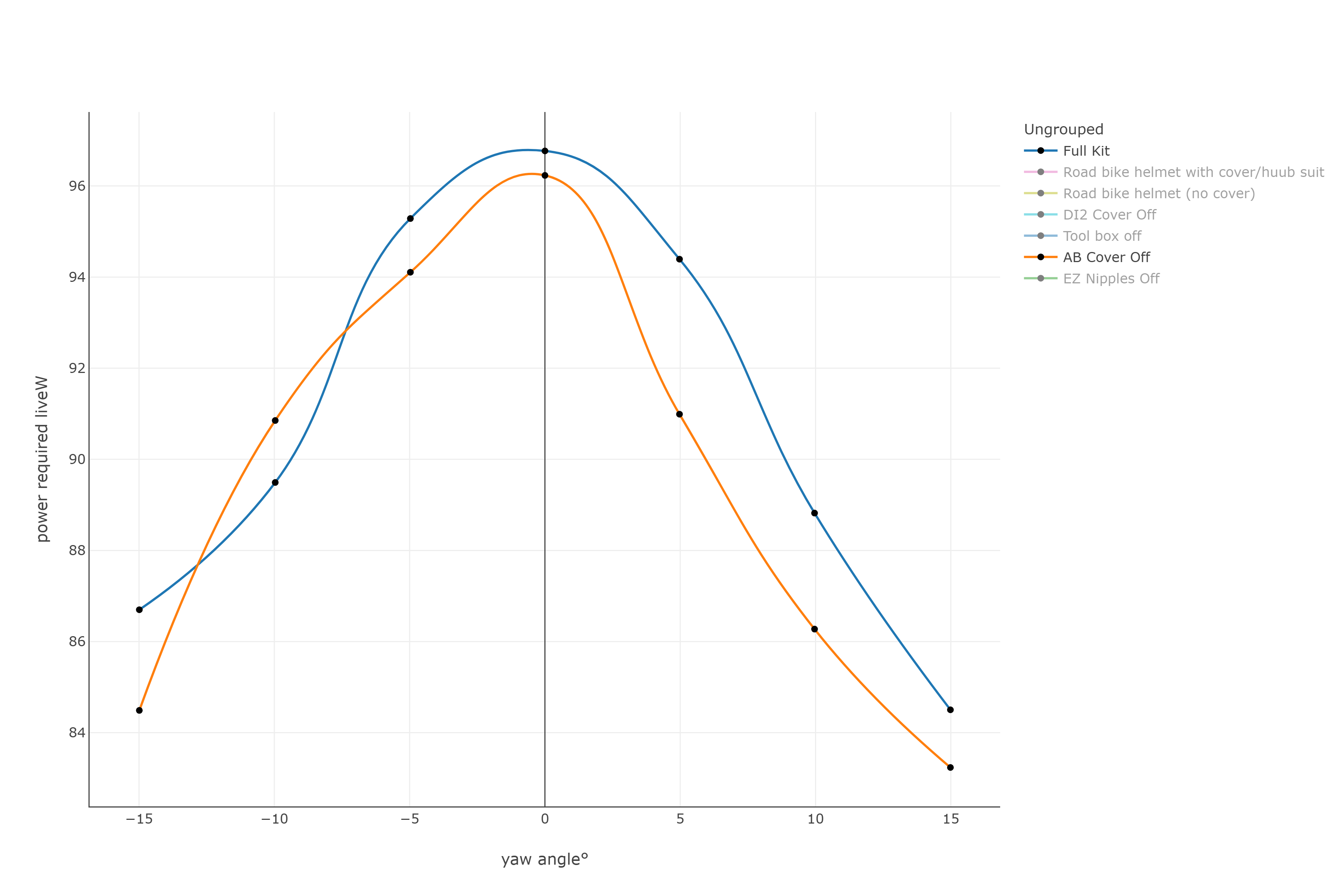
30kph 1-5 Watts Saving
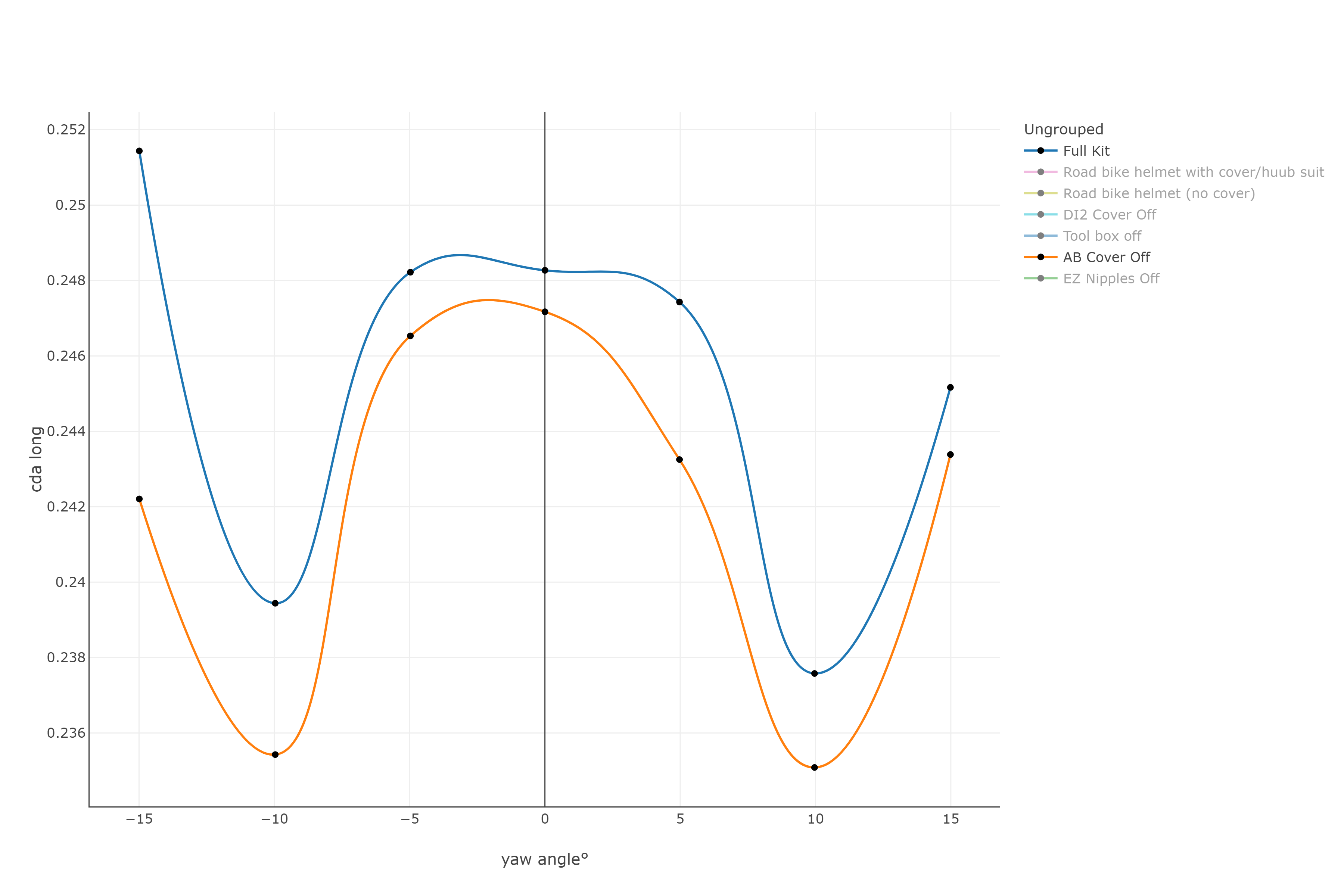
CDA 40kph
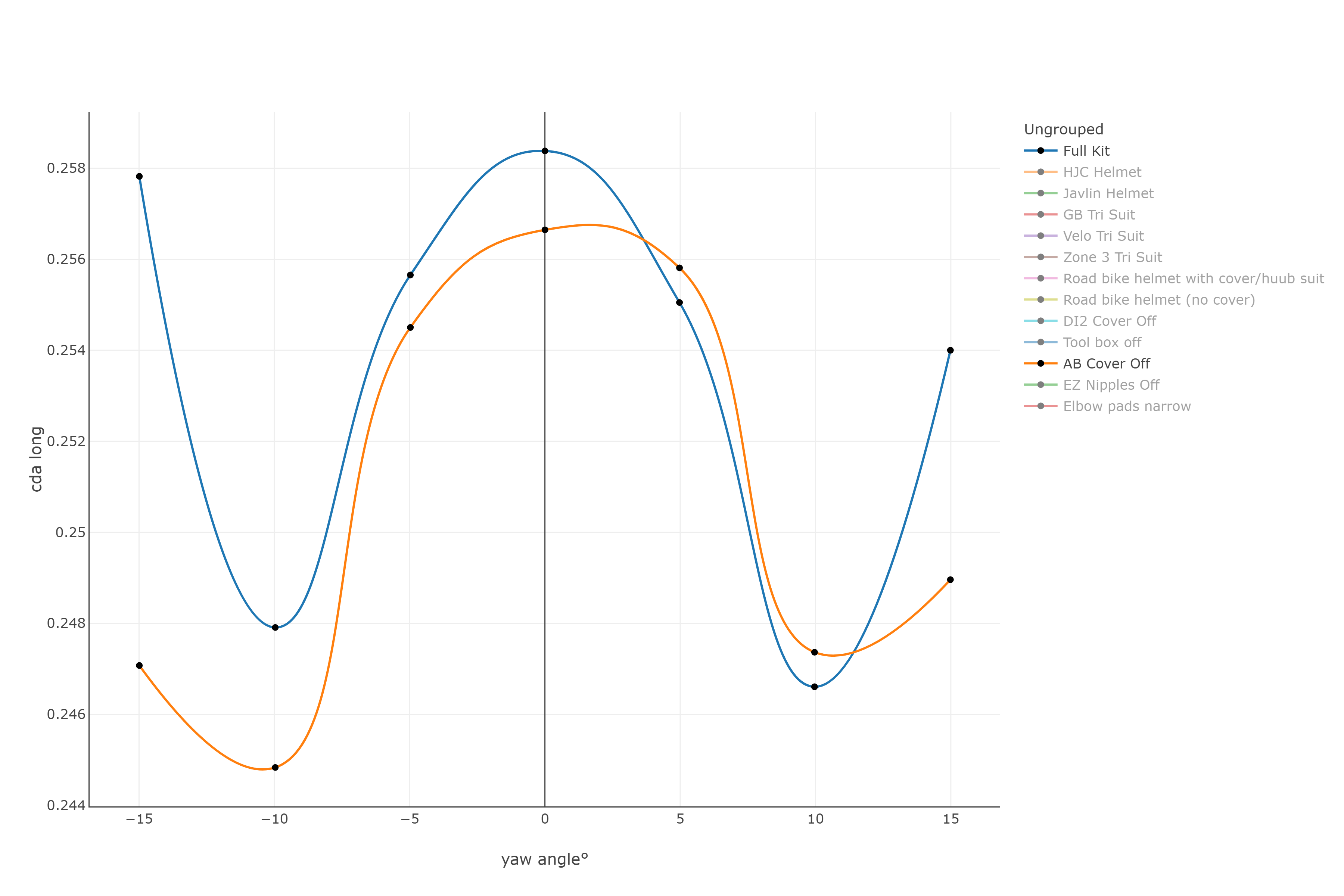
CDA 45kph
Wind Tunnel Validated ✅
Silverstone Sports Engineering Hub 08/07/26
Independent Testing Engineer: Wind Tunnel Verification: Independent Test Subjects
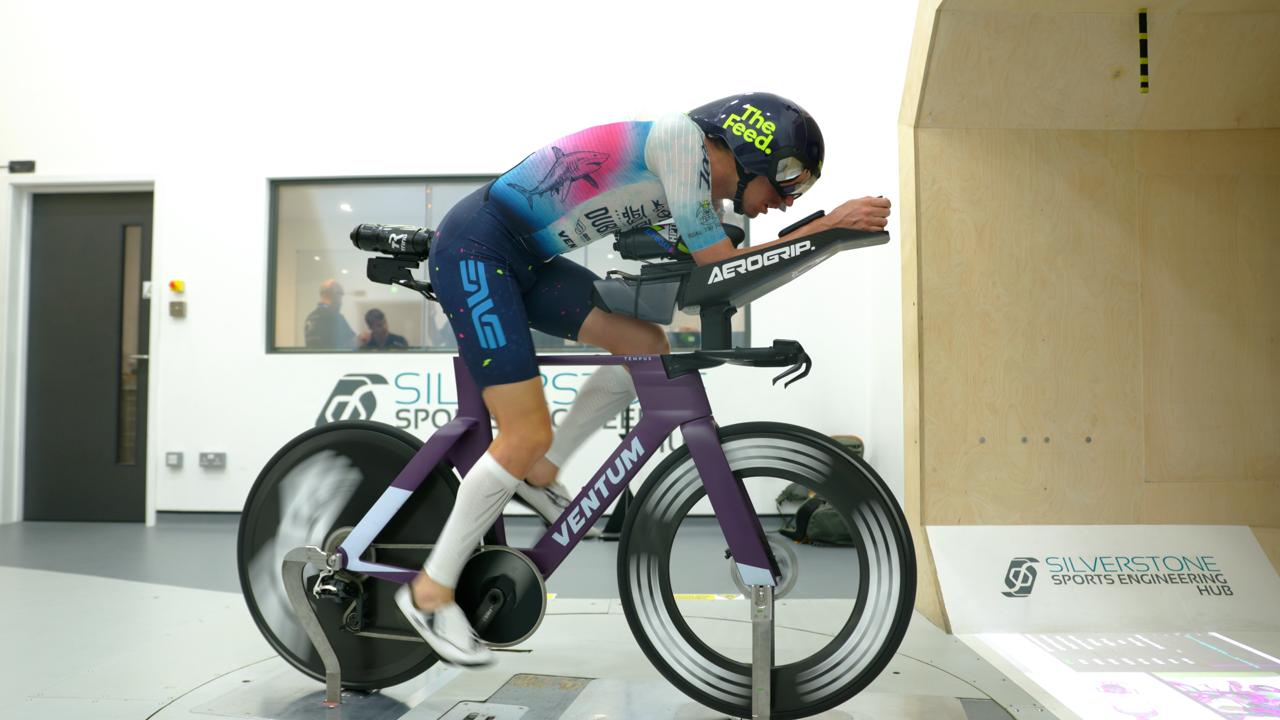
The test subject wanted to identify the fastest BTS system on the market, EZ Gains totally embraced this challenge, it was important to test the most optimal set-up, so it could give a fair comparison.
Bottles Close to the Bum IS Faster, its not possible to do this with most other BTS units on the market, especially if you sit FORWARD on the saddle.
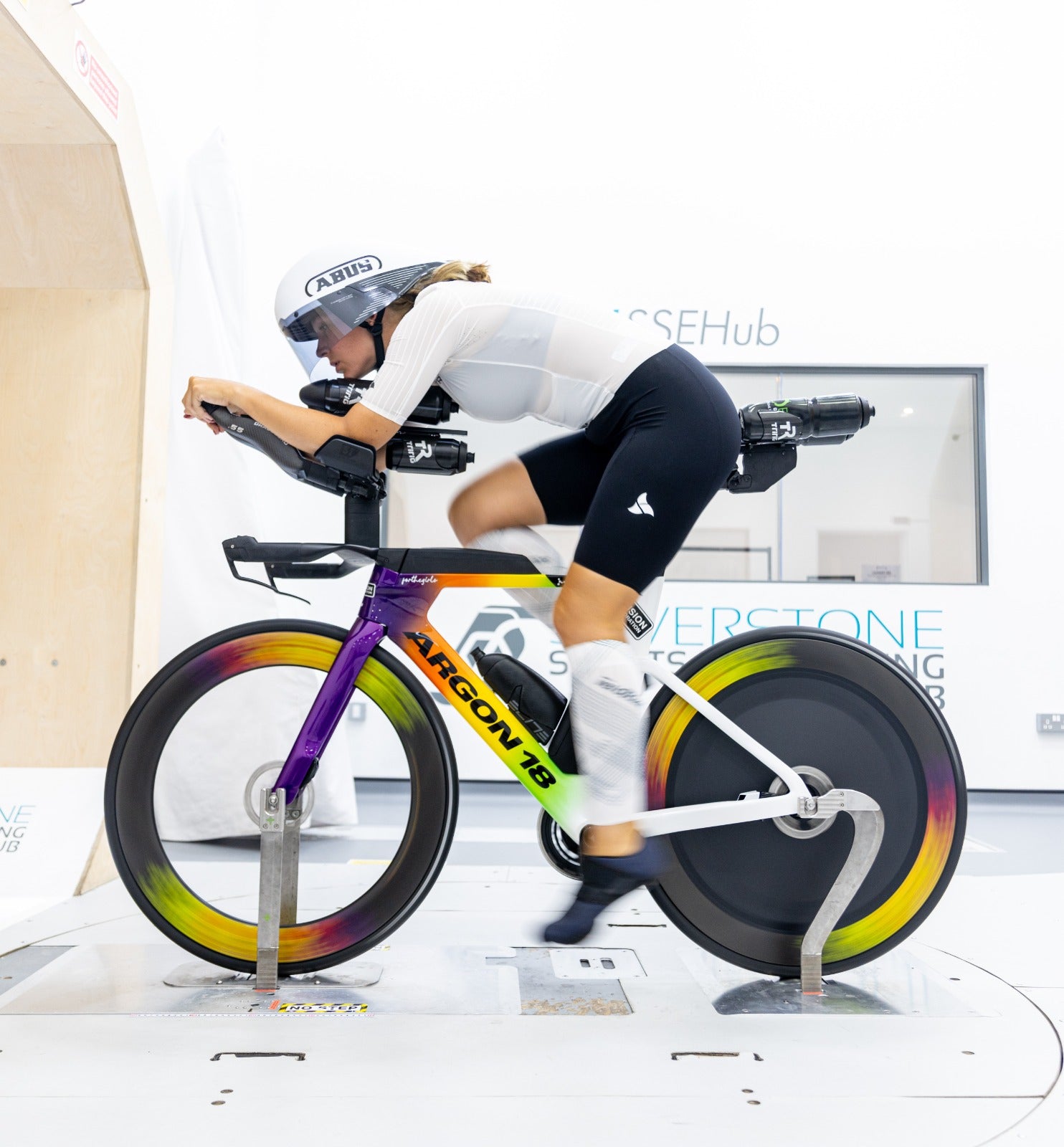
EZ Hydro-Gains® - Double
The Fastest Tested Accross All Riders
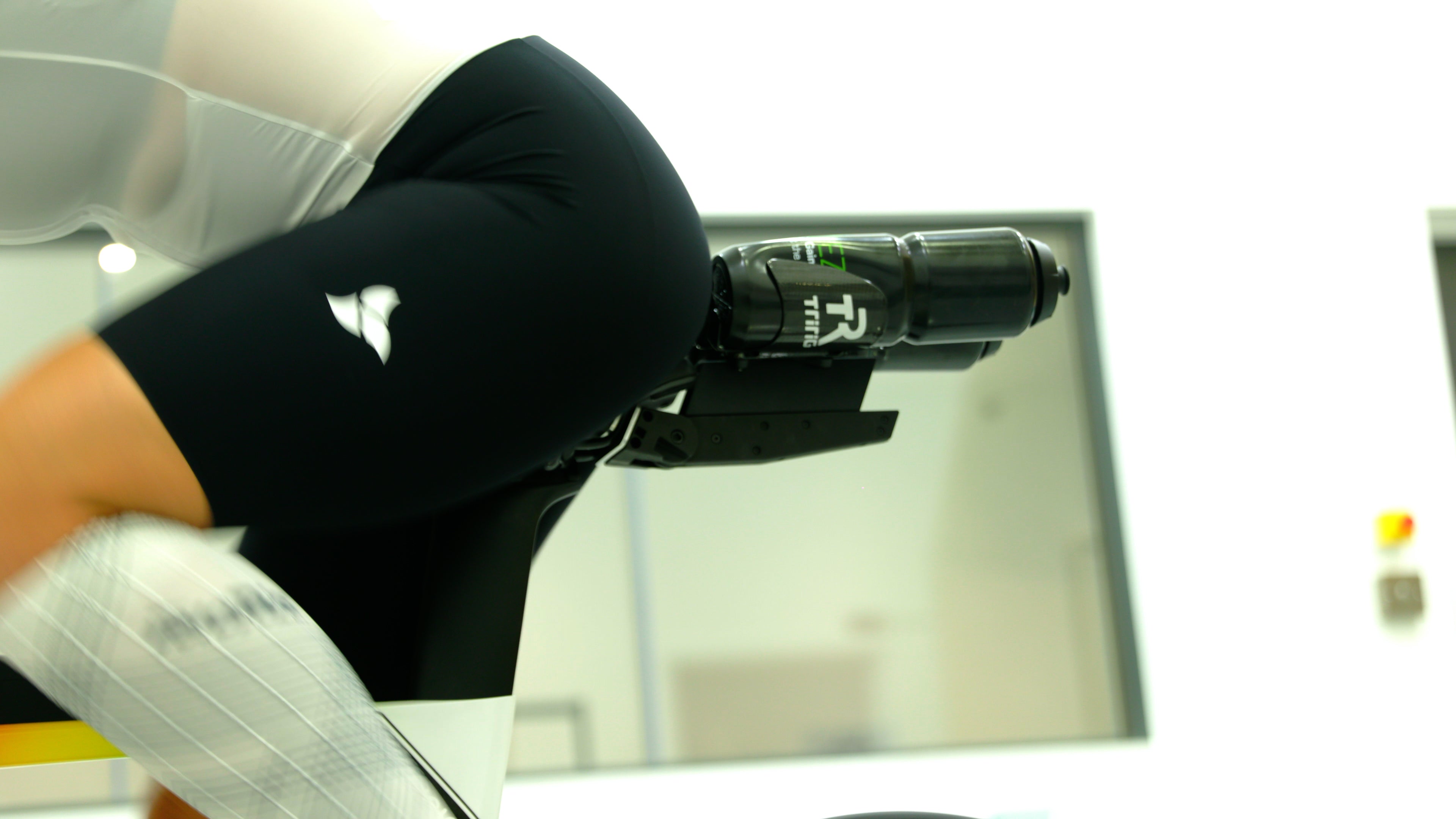
Competitor BTS System:
3.1 Watts Slower at 30kph - 3.1 Watts Slower at 40kph - Red
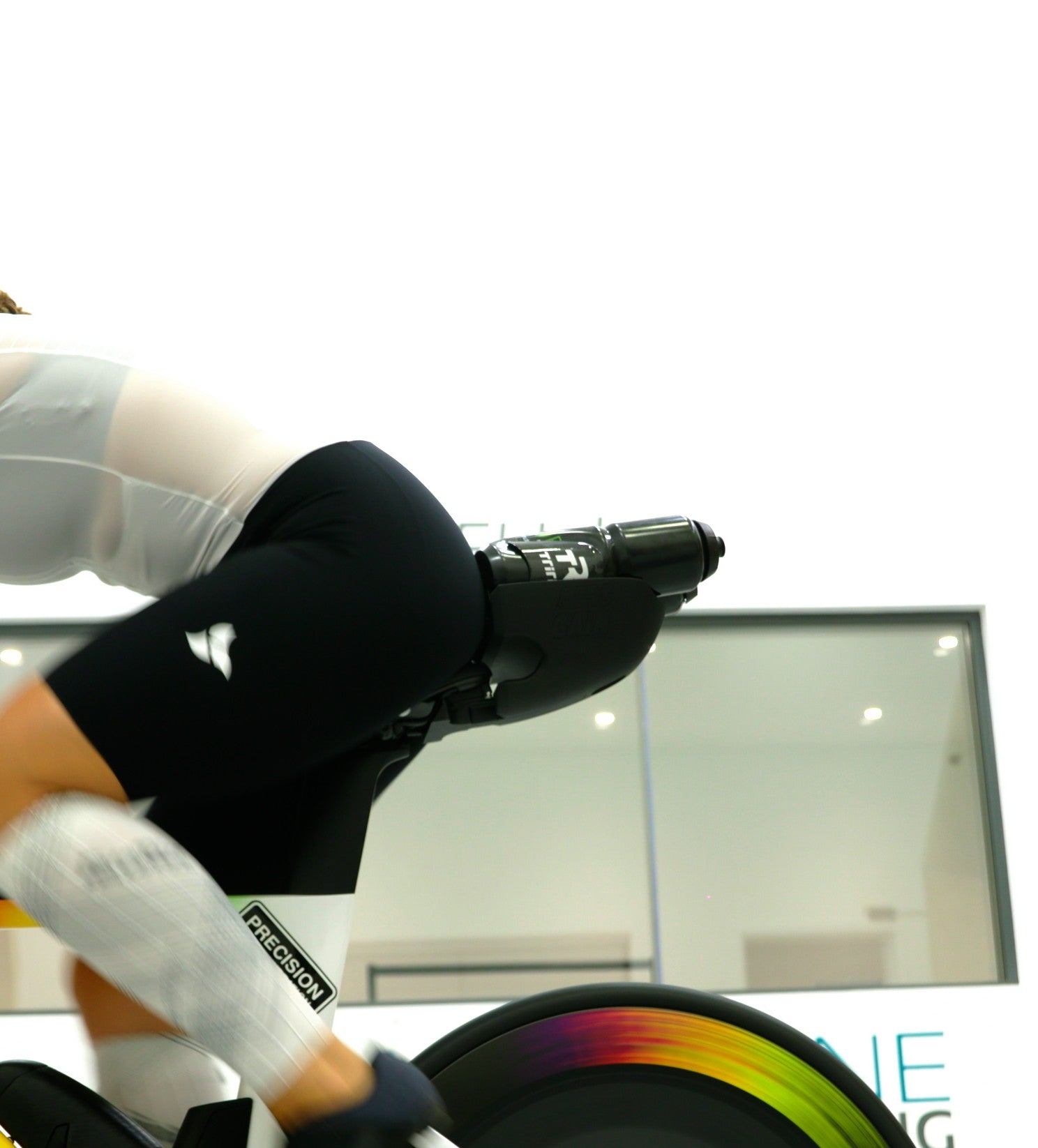
Competitor BTS System:
2.9 Watts Slower at 30kph - 1.2 Watts Slower at 40kph - Purple
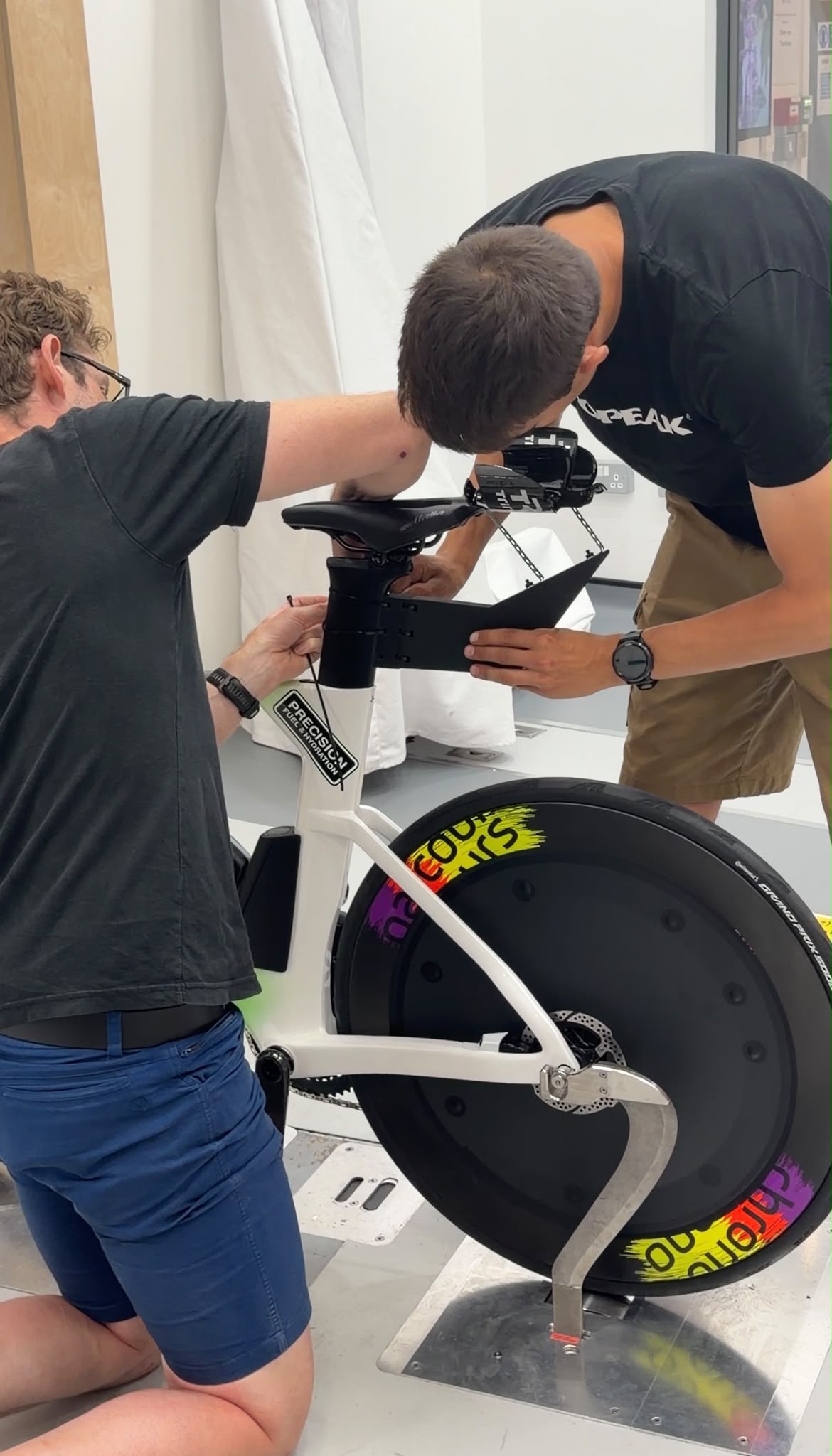
Competitor BTS System:
3.5 Watts Slower at 30kph - 4.5 Watts Slower at 40kph and slower then having no BTS - Brown
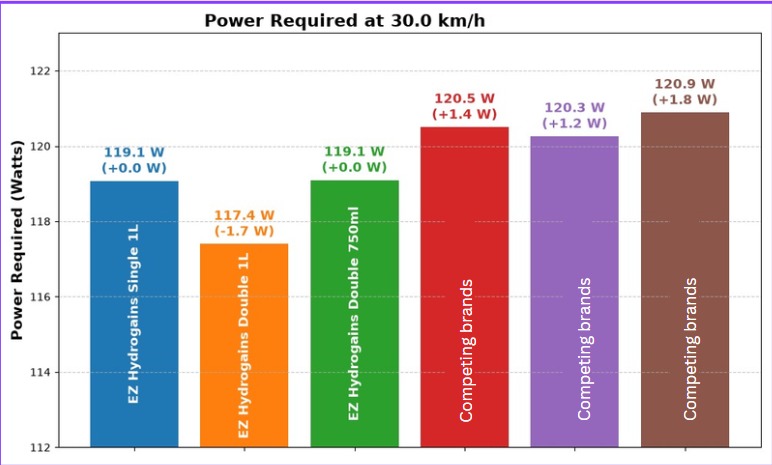
Watt Saving at 30kph
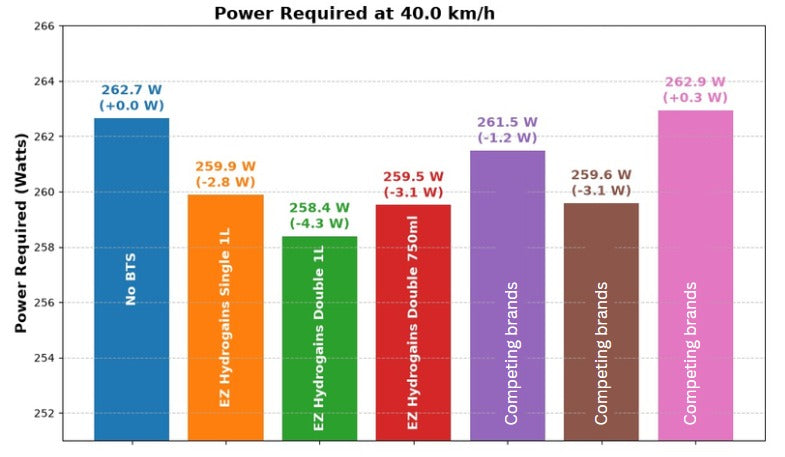
Watt Saving at 40kph
EZ Hydro-Gains Double 750ml Wove Saddle
EZ Hydro-Gains Single 750ml Wove Saddle
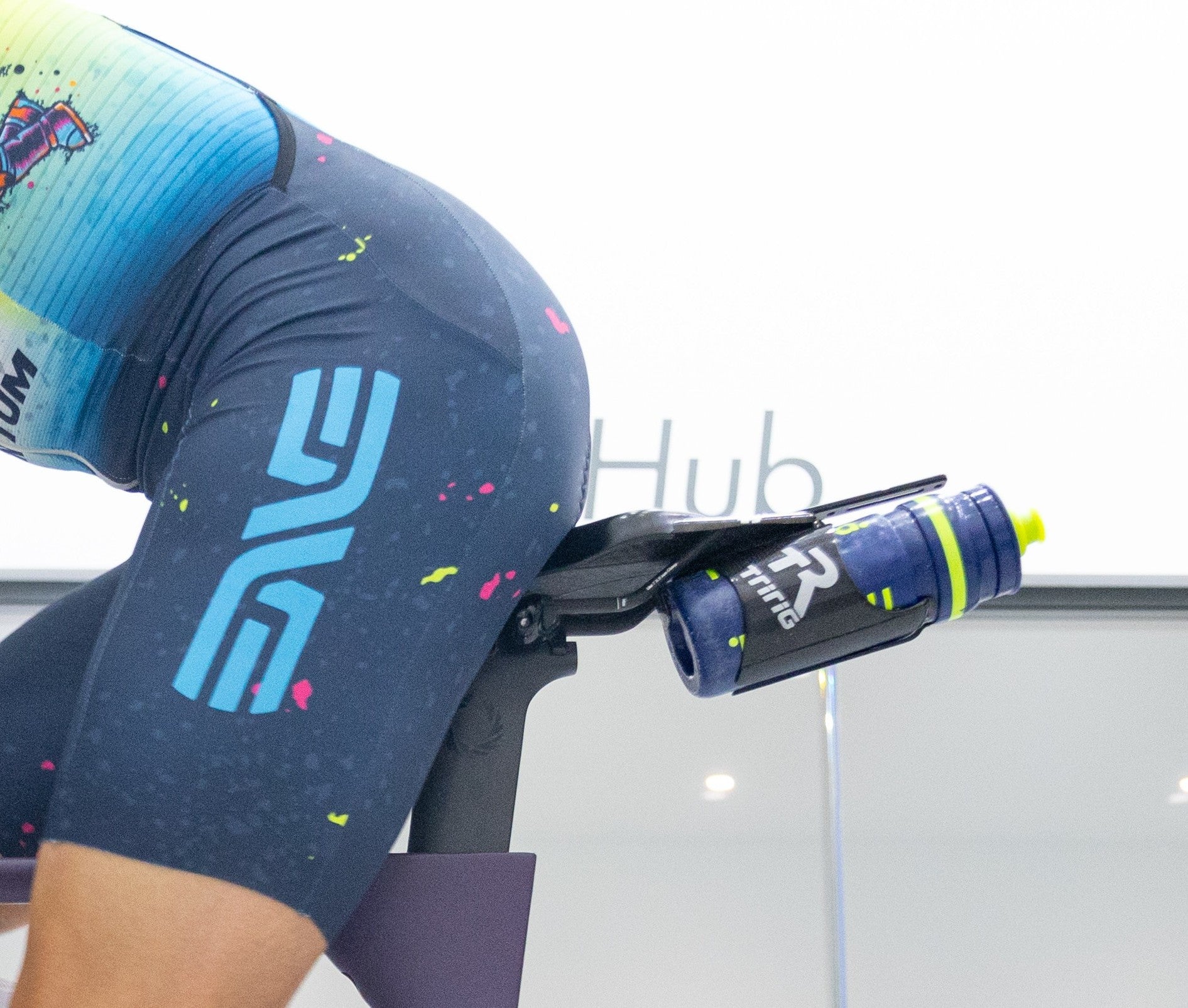
Wove Single Traditional BTS 750
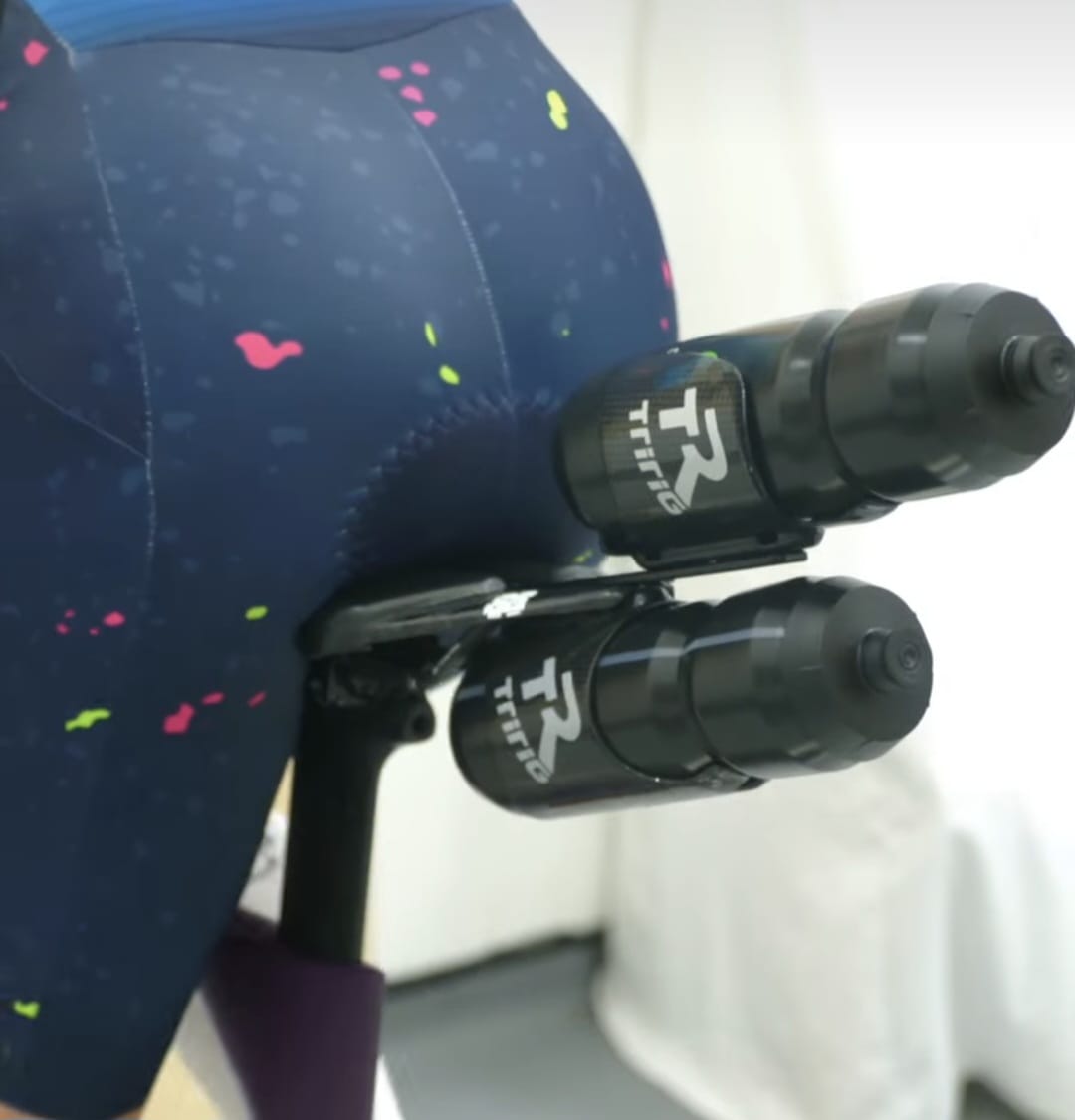
Wove Double Traditional BTS 750

40Kph 3Yaw
EZ Hydro-Gains Saves 2.6 Watts

50Kph 3Yaw
EZ Hydro-Gains Saves 6 Watts

40Kph 10 Yaw
EZ Hydro-Gains Saves 2.5 Watts

50kph 10 Yaw
EZ Hydro-Gains Saves 2.7 Watts
Example of Aerodynamic Clothing
This was a bit of fun, but also an exercise to show YOU, the athletes, just how much of a difference aerodynamics can make. It’s something everyone can do to go faster without necessarily working harder.
So, next time you’re out cycling, have a think about the clothing you’re wearing and any flappy bits! Get them tucked up and keep things nice and aero.
Aero belly and boobs are good.


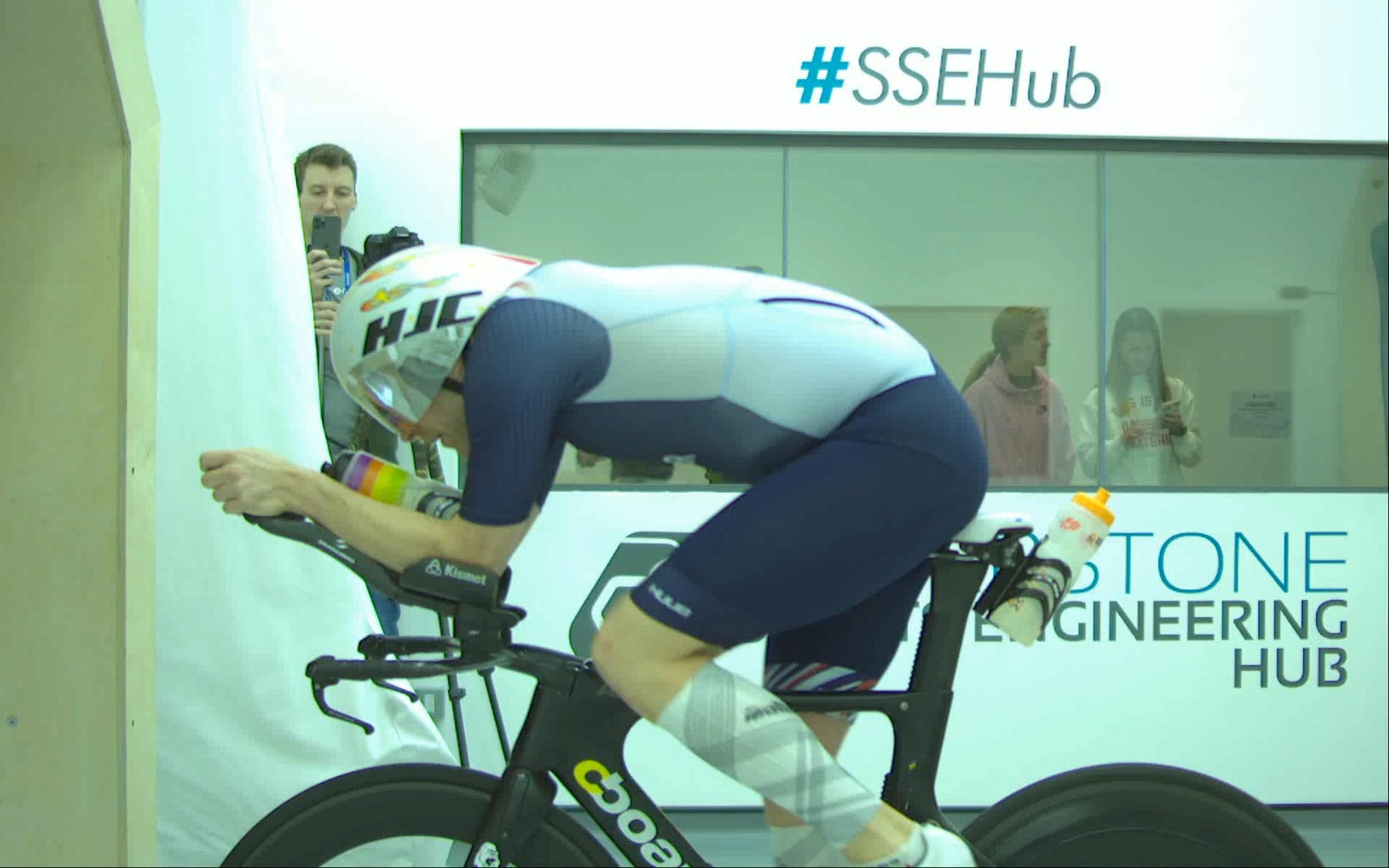
EZ Gains® Tests on Old GBR Suit vs New Huub GBR Suits
Tests were conducted at Silverstone Sports Engineering Hub wind tunnel, probably one of the best testing facilities in the world, the engineer was independent and employed by Silverstone Sports Engineering Hub, and the tests were carried out by EZ Gains® with a member of Age Group News present to validate results.
EZ Gains tested adding an Aero Bar Cover at the front of the bike to replicate an aero cockpit. We feel this would be classed as a fairing so will not go into production.
EZ Gains tested a front Aero Bar Cover 1-6 Watts
No Aero Bar Cover
Aero Bar Cover On
30kph 1-5 Watts Saving
CDA 40kph
CDA 45kph

EZ Gains Frame Toolbox and Top Tube Pouch
EZ Gains tested in different runs the effect of removing the lower ToolBox and Bottle and then the effects of removing the top tube bag.

Toolbox & Bottle 3.1 Watt Saving 50kph

Top Tube Pouch 2.7 Watts 40kph

Top Tube Pouch 4.4 Watts 50kph
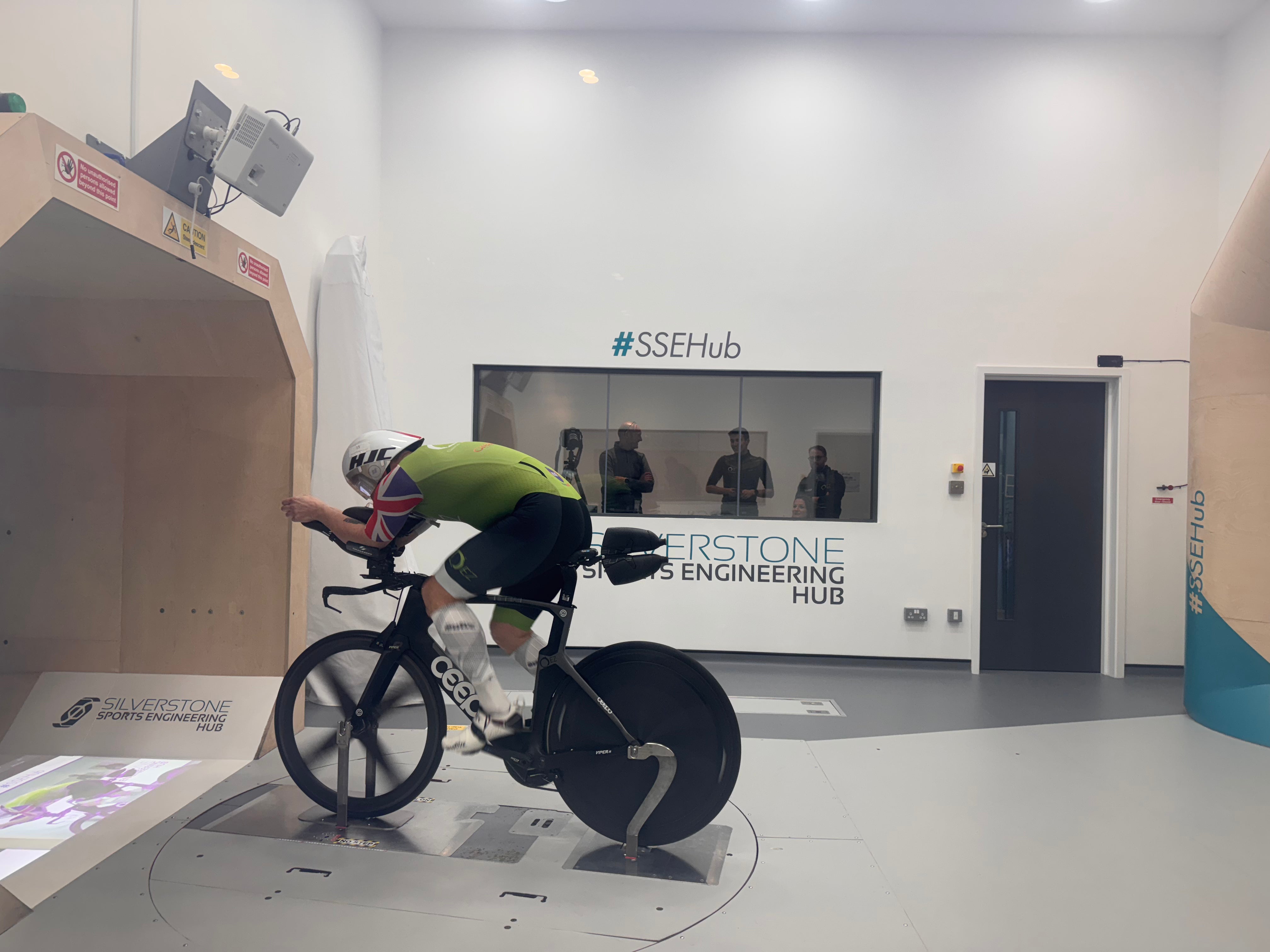
EZ Gains® Water Bottle Positions
Tests were conducted at Silverstone Sports Engineering Hub wind tunnel, probably one of the best testing facilities in the world, the engineer was independent and employed by Silverstone Sports Engineering Hub, and the tests were carried out by EZ Gains®
Gains without the Cost

EZ Hydro Gains® (Universal Rail Mount) Up To 12 Watts (NOT ISM OR CARBON RAIL COMPATIBLE)